Nestled within the fortified city of Mdina, Malta, St. Paul’s Cathedral stands as a testament to centuries of religious devotion, architectural prowess, and historical significance.
This magnificent Baroque edifice not only serves as a place of worship but also offers visitors a glimpse into Malta’s rich past and cultural heritage.
A Glimpse into history
 According to tradition, the site of the cathedral was originally occupied by a palace belonging to Saint Publius, the Roman governor who welcomed the Apostle Paul after his shipwreck on Malta around 60 A.D. The Acts of the Apostles recount that Paul cured Publius’ father and many other islanders during his stay. While archaeological evidence supporting this legend is limited, the narrative underscores the deep-rooted association between the cathedral and Malta’s early Christian history.
The first cathedral on this site is believed to have been dedicated to the Blessed Virgin Mary, but it fell into disrepair during the Arab period. Following the Norman conquest in 1091, Christianity was reestablished, and a new cathedral dedicated to St. Paul was constructed in the 12th and 13th centuries, showcasing Gothic and Romanesque architectural elements.
In 1693, a devastating earthquake struck the region, causing significant damage to the medieval structure. Rather than repairing it, the decision was made to rebuild the cathedral entirely in the Baroque style. Maltese architect Lorenzo Gafà was commissioned for this ambitious project. By 1702, the new cathedral was consecrated, and it was fully completed in 1705, standing today as Gafà’s masterpiece.
Architectural marvels
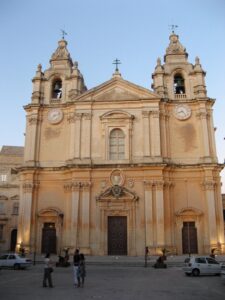
St. Paul’s Cathedral is a quintessential example of Baroque architecture, characterized by its harmonious proportions and intricate detailing. The façade features twin bell towers flanking a central pediment, creating a balanced and imposing presence.
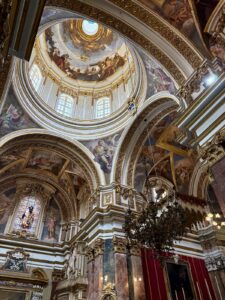
Upon entering, visitors are greeted by a Latin cross layout with a central nave and two aisles, separated by a series of arches supported by marble columns. The vaulted ceilings are adorned with elaborate frescoes depicting scenes from the life of St. Paul, while the marble-inlaid floor features a collection of tombstones commemorating various bishops and nobility.

The cathedral’s dome, an architectural feat of its time, allows natural light to flood the interior, enhancing the spiritual ambiance. The original 18th-century frescoes in the dome were destroyed in an earthquake in 1856. The current frescoes were painted by Mario Caffaro Rore in 1927.
Artistic Treasures
Beyond its architectural splendor, St. Paul’s Cathedral houses a wealth of artistic masterpieces. The main altar features a painting of the Conversion of St. Paul by the renowned artist Mattia Preti. Additionally, the cathedral boasts an impressive collection of silver artifacts, intricate woodwork, and a series of paintings depicting various saints and biblical scenes.
Adjacent to the cathedral, the Cathedral Museum, once the Seminary, offers an extensive collection of religious artifacts, manuscripts, and artworks, including works by Albrecht Dürer and other notable artists. The museum provides deeper insights into the religious and cultural history of Malta.
Facts and legends
The miraculous shipwreck
Local legend holds that during St. Paul’s shipwreck, he was bitten by a venomous snake but suffered no harm, leading the Maltese to believe he was under divine protection. This event is commemorated in various artworks within the cathedral.
The unscathed painting
During the 1693 earthquake, while much of the original cathedral was destroyed, a painting of the Madonna and Child miraculously survived unscathed. This painting is now prominently displayed in the cathedral as a symbol of resilience and faith.
In The Lost Guardian of Malta, St. Paul’s Cathedral in Mdina is more than just a Baroque masterpiece—it holds secrets buried beneath centuries of devotion.
As Ceti steps through its towering doors, searching for the one man who might help him, he instead finds unsettling whispers of the past and a revelation that shakes the very foundation of what he believes. Within its marble columns and beneath its gilded dome, a hidden path awaits—one that leads not just to history, but to something far more dangerous.
Visitor information
St. Paul’s Cathedral is open to visitors throughout the week, with specific hours varying depending on religious services and events. An entrance fee is typically required, which includes access to both the cathedral and the adjoining museum.
Dress code
As an active place of worship, visitors are expected to dress modestly. Shoulders and knees should be covered, and hats should be removed upon entry.
Photography
 Photography is permitted in most areas of the cathedral, though the use of flash is discouraged to preserve the artworks.
Getting there
Mdina, known as the “Silent City,” is easily accessible by public transport from various parts of Malta. Buses frequently run to Mdina from Valletta, Sliema, and St. Julian’s. For those driving, parking facilities are available outside the city walls, as vehicular access within Mdina is restricted.
Nearby attractions
While in Mdina, consider exploring the following sites:
- Mdina Dungeons: Delve into Malta’s darker history with a tour of these subterranean chambers.
- Palazzo Falson: A historic house museum showcasing a diverse collection of antiques and artworks.
- Bastion Square: Offers panoramic views of the Maltese landscape, perfect for photography enthusiasts.