Writing a thriller is often described as an exercise in invention. In reality, The Lost Guardian of Malta emerged not from a single act of imagination, but from a long process of accumulation – of places revisited, questions left unanswered, research pursued patiently, and many hours spent alone behind a computer screen, shaping and reshaping a story that refused to be rushed.
This novel did not begin with a plot twist or a high-concept idea. It began with Malta. Bogaerts explains.
Malta, my muse
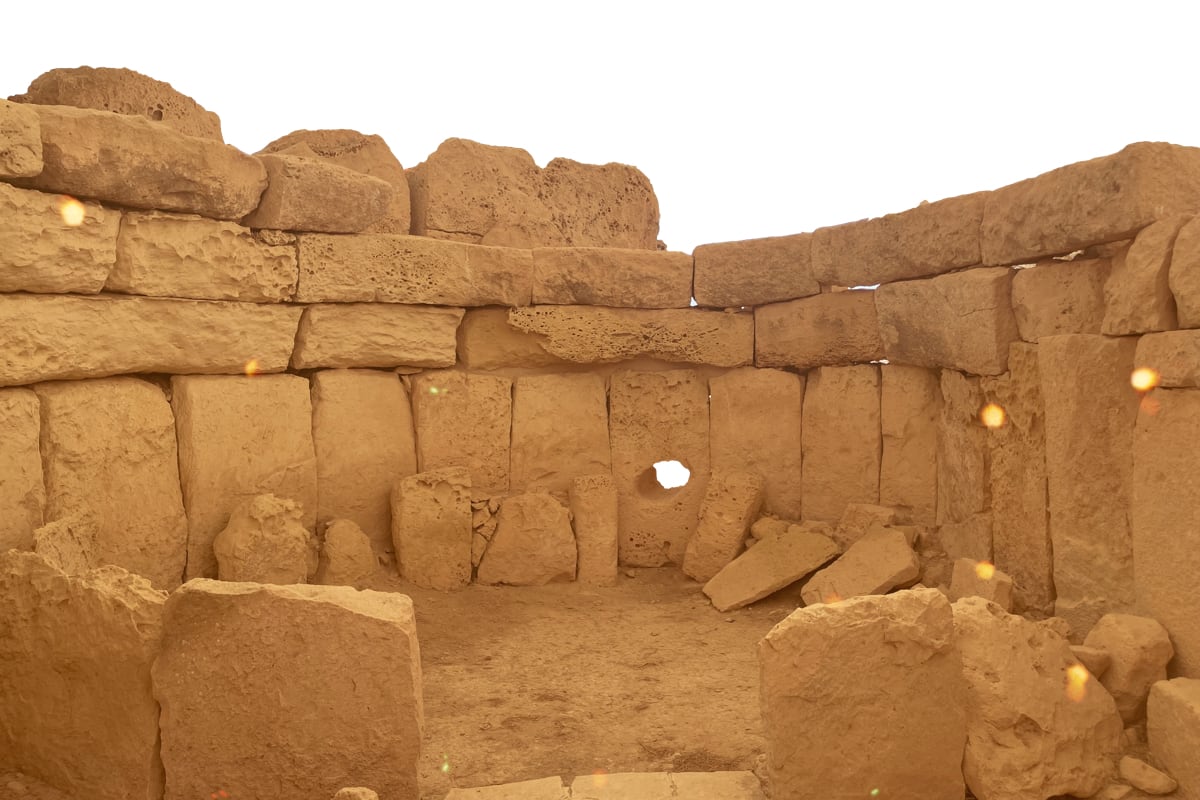
 My connection to the island reaches back many years, long before I ever considered writing a novel about Malta. Over time, it became more than a destination; it became a place of return, both physically and mentally. It became ‘home’. Few locations are as densely layered with history, and fewer still allow that history to remain so visible, so tangible, in everyday life. Malta does not present its past as something distant or abstract. It insists on being felt.
That familiarity mattered. For someone interested in history, Malta offers an almost overwhelming richness – ancient structures, contested histories, and the persistent sense that much has been built on what came before.
Do not write immediately
One of the most important decisions I made early on was not to write immediately. Instead I returned to the locations that would eventually become central to the book. I walked them repeatedly, without notes and without an outline. I paid attention to distances, to how spaces connect, to how light and sound behave at different times of day. These are not details that can be convincingly invented.
Real locations need real understanding
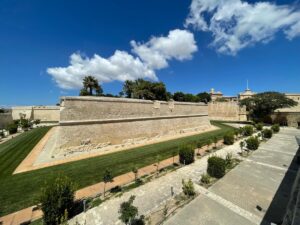 For me, writing a thriller – especially one grounded in real locations – requires physical understanding. You cannot convincingly write tension into a place you have not experienced. A narrow street, a courtyard, a set of steps carved into stone: all of these shape movement, pacing, and possibility. Before any plot existed, the geography of Malta was already influencing the story’s rhythm. Only after these places had settled into memory did I begin imagining scenes unfolding within them. Often, it felt less like invention than recognition. Certain moments seemed inevitable once the setting was fully understood, while others – ideas that looked good on paper – simply did not belong. Malta was not a backdrop; it was an active presence, quietly guiding what the story could and could not become.
Expanding the realm
The story demanded additional historical depth and geographical reach, leading to locations across North Africa, Europe, and parts of Asia. Unlike Malta, where research was grounded in my direct experience, this broader scope required another approach.
Much of the research for these locations was deliberately old-fashioned. I spent long hours in libraries, working through books, historical accounts, and academic texts. There is a particular discipline that comes with library research: a slower pace, no shortcuts, and a sense of continuity. Places such as Mauritania and Egypt entered the novel not because they were exotic, but because they helped the story taking shape. As with Malta, every location had to earn its presence. Research existed only to support the narrative. In thriller writing, excess information is a liability. Precision matters.
Throughout this process, I kept asking myself a simple question: “Does this element serve the story, or does it merely complicate it?”
Many fascinating details were left out because they belonged to history, not to this particular novel.
1… 2… 3… Write!
With the story defined, the real work of writing a thriller could begin. Despite the genre’s reputation for speed, thrillers are built on structure. Tension depends on careful construction. Mystery books, in particular, demand a balance between revelation and restraint.
I worked through multiple structural versions of the story, outlining, dismantling, and rebuilding it repeatedly. Plot twists were tested not for shock value, but for inevitability. The best twists do not feel random; they feel earned. Originality does not come from complexity, but from coherence. This stage required discipline. It meant setting aside ideas I was personally attached to. It meant accepting that a cleaner structure often leads to a stronger impact.
Bringing Ceti to life
 No amount of structural precision can compensate for weak characters, and much of the novel’s development centered on character work. Ceti, in particular, was never intended to function simply as a guide through the plot. I spent a great deal of time thinking about who he was when nothing was happening – his motivations, his doubts, his contradictions.
In mystery books, characters must be capable of carrying uncertainty. They need an inner life that continues even when the plot pauses. As Ceti became more fully realized, he began to resist easy solutions. Scenes had to be rewritten because his responses no longer aligned with my initial plans. That resistance was a sign that the character was becoming real.
In my solitude…
Writing The Lost Guardian of Malta was, for the most part, a solitary process. Much of it unfolded behind a computer screen, with no immediate feedback and no assurance that the story was working. Progress was slow and often invisible. There were days when doubt felt louder than confidence. This solitude is rarely discussed honestly, yet it is fundamental to writing a serious thriller. Without distraction or external validation, weak ideas eventually reveal themselves. The process demands persistence – returning to the page day after day, trusting that clarity will emerge through sustained effort.
“Kill your darlings”
At several points, I had to confront material I genuinely loved but could not justify keeping. Scenes that slowed the pacing, passages that explained too much, moments that were clever rather than necessary all had to go.
“Kill your darlings” is not a metaphor in this genre; it is a practical necessity. Mystery books rely on momentum, and momentum suffers when indulgence creeps in.
Each cut sharpened the story. The novel became leaner, more focused, and more honest as a result.
Completing the first draft was not an ending, but a new phase of work. Language was refined, transitions tightened. If a revelation feels unearned, if a connection does not hold, the entire structure is weakened. This phase took time and patience, but it was essential.
Back into the world

Preparing the book for publication required yet another shift in mindset. The story was no longer a private project; it had to stand on its own for readers of mystery books and historical thrillers. Consistency, clarity, and tone mattered more than personal attachment.Only when The Lost Guardian of Malta could exist independently – without explanation or qualification – did it feel complete.
In the end, this novel is the result of a long relationship with a place, a commitment to careful research, and respect for the discipline of writing. It is a Malta novel shaped by walking before writing, by libraries as much as by landscapes, and by solitude as much as inspiration. More than anything, it reflects my belief that writing a thriller is not about speed or spectacle, but about attention – to place, to character, and to the quiet, demanding process that turns ideas into a story worth telling.
Enjoy!
Steven